
One Step Away: Fall Protection
Eric W. Rogers
April 2026 · 7 min read
Part 1: Five Minutes
The scaffold looked solid. That's what Robert told himself as he stepped onto the second platform, 18 feet above the concrete floor.
It was a routine inspection — the kind he'd done a hundred times. The harness was in the truck. He'd only be up there five minutes. Nobody was watching. The plank beneath his boots felt steady. The frame wasn't shaking. Everything looked fine.
Robert didn't clip in. He didn't think he needed to.
Fall Protection Fundamentals
Falls are the leading cause of death in construction — more than electrocutions, struck-by incidents, and caught-in hazards combined.
- •OSHA requires fall protection at 4 feet in general industry and 6 feet in construction.
- •A personal fall arrest system (PFAS) has three components: full-body harness, lanyard or SRL, and a certified anchorage point rated for at least 5,000 lbs per worker.
- •Maximum allowable free-fall distance: 6 feet.
- •Most fatal falls happen from heights under 20 feet — on “routine” jobs, just like this one.
Part 2: The Shift
Then the plank shifted.
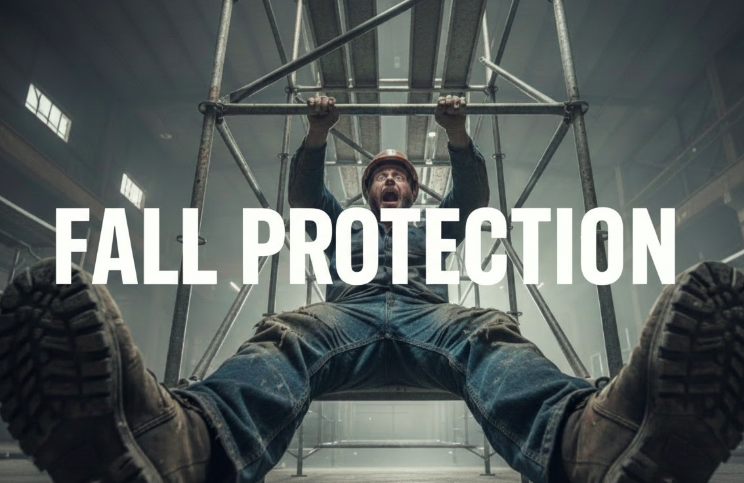
Robert's left foot slipped sideways. His stomach dropped before his body did. In that half-second, he grabbed the scaffold frame with both hands and caught himself — barely. His knuckles went white. His boots dangled over the edge.
Eighteen feet below, the concrete floor stared back at him.
He pulled himself back up, breathing hard. No one saw it. No one had to. Robert knew exactly what almost happened — and why.
Before You Go Up: Inspection and Setup
Before any work at height, your equipment and environment must be checked — every single time.
Harness Inspection
Look for cuts, fraying, burns, chemical damage, and broken buckles. Check the D-ring for cracks or deformation. If anything is damaged, remove it from service immediately.
Anchor Point Selection
Never anchor to pipes, guardrails, or anything uncertified. A proper anchor is rated for 5,000 lbs per worker and positioned above the worker's D-ring whenever possible.
100% Tie-Off
Stay connected at all times while at height. When moving between anchor points, use a double lanyard system — never disconnect both lanyards at the same time.
Your harness goes on before you ascend — not after you get up there.
Part 3: Every Time After That
Robert climbed down slowly. He walked to the truck, opened the toolbox, and pulled out his harness. He inspected every strap, every buckle, every connection point. Then he put it on, climbed back up, and clipped into a certified anchor before taking a single step on the platform.
Five minutes. That's all the job took. But those five minutes without protection almost cost him everything.
From that day forward, Robert never went up without his harness. Not for five minutes. Not for one. He told every apprentice the same thing: “The fall doesn't care how long the job takes.”
Mini Quiz — Test Your Knowledge
Select your answer for each question, then click Reveal Answers.
1. At what height does OSHA require fall protection in general industry?
2. What are the three components of a personal fall arrest system (PFAS)?
3. What is the maximum free-fall distance allowed with a personal fall arrest system?
4. When should you inspect your harness?
5. What is the minimum anchor point rating per worker for a personal fall arrest system?
The Bottom Line
Fall protection is not optional, and it is not just for long jobs. It is for every job, every time, at every height that puts you at risk. Robert got lucky. Not everyone does. The fall does not care how long the job takes.
Fall protection checklist — know it cold
Assess the Hazard
Identify all fall hazards before work begins. Review the site fall protection plan.
Select the Right System
Guardrails, safety nets, or personal fall arrest — match the system to the task.
Inspect Your Equipment
Check harness, lanyard, and connectors before every use. Damaged gear comes out of service immediately.
Identify a Certified Anchor
5,000 lbs per worker minimum. Never anchor to pipes, guardrails, or uncertified structures.
Don Your Harness Before You Ascend
Put it on at ground level. Adjust for a snug fit. Connect before stepping to the edge.
Maintain 100% Tie-Off
Stay connected at all times. Use a double lanyard when moving between anchor points.
Watch the Work Area Continuously
Conditions change. Wet surfaces, shifting materials, and debris are fall hazards too.
Know the Rescue Plan
Suspension trauma can be fatal. Rescue equipment must be on site before you go up.
Wear your harness. Inspect your anchor. Work like your family is counting on you to come home — because they are.
Contact Us
Questions about training, partnerships, or resource requests? Drop us a message.
Ready to take your skills
to the next level?
Join 1,400+ electricians and students learning for free on YouTube. New lessons every week.